Diet and Mental Health: Food, Mood and Focus

What you eat can influence how you feel and function throughout the day, but food is only one piece of mental well-being. Sleep, movement, stress, health conditions and your circumstances also matter. Our guide to diet and mental health offers a starting point for exploring connections among nutrition, mood and focus, without expecting any single meal to change how you feel.
Food and mental well-being: the everyday connection
Your brain and body need a steady supply of energy and nutrients to function. Regular, balanced meals can help support energy and concentration, especially if long gaps between meals leave you feeling distracted or tired. There is no perfect schedule for everyone, though: your appetite, workday, activity level and health needs all play a part.
The brain and digestive system also communicate through what is often called the brain–gut connection. Nerves and chemical signals carry information between them, while the community of microorganisms in your gut interacts with your body in complex ways. Research continues to explore these relationships, and no specific food can guarantee a particular mood.
It helps to keep the bigger picture in mind. A difficult day or a period of low mood is not necessarily caused by what you ate. Nutrition can support overall health, but it is not a substitute for mental health care or other forms of support.
Build a supportive eating routine
Rather than focusing on a single “brain food,” consider combinations that are practical and satisfying. You might pair oatmeal with yogurt and berries, add beans and vegetables to brown rice, or make a whole-grain sandwich with hummus, vegetables and a source of protein. Nuts, seeds, olive oil and avocado are examples of fats you can include when they suit your needs.
Regular meals and water throughout the day can be useful foundations. The following ideas are starting points, not a prescribed meal plan. Adjust portions, timing and ingredients to your appetite, preferences and any guidance from your health professional.
| Habit | Simple starting point | Why it may help |
|---|---|---|
| Regular meals | Pair a whole grain with protein and fruit or vegetables | Helps provide energy and a range of nutrients |
| Hydration | Keep water available throughout the day | Supports normal physical and cognitive function |
| Varied foods | Choose different fruits, vegetables, proteins and grains | Helps cover a range of nutritional needs |
Variety does not have to mean buying many expensive ingredients. Frozen vegetables, canned beans, seasonal fruit and store-brand grains can make balanced meals more accessible. For more general guidance on eating patterns, see the World Health Organization’s healthy diet overview.
Explore the diet and mental health eBook
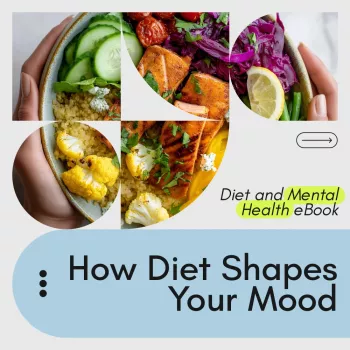
If you want to learn more about these connections, our How Diet Shapes Your Mood, Focus & Mental Well-being eBook is a resource for exploring nutrition, brain health and the gut connection. It offers a starting point for reflection on the role food may play in your day-to-day well-being.
You can use the guide to consider questions such as whether your usual meals keep you satisfied or whether a more consistent routine might be worth trying. It is educational, not a replacement for advice tailored to your medical or mental health needs. Visit the product page for current details and purchase information.
Put what you learn into practice
Start by noticing patterns without judging yourself. When do you usually eat? Do you have water available? Are there times when your energy or concentration tends to dip? A few notes over several days may help you identify a question to explore, but they cannot diagnose a condition or prove that a particular food caused a change in mood.
Choose one manageable adjustment at a time. For example, you could add a protein source to breakfast, keep a water bottle nearby, or prepare an easy lunch before a busy day. Give yourself room to adapt: a useful routine should fit your budget, culture, dietary needs and schedule, rather than require you to overhaul everything at once.
When you need ideas for putting meals together, explore The Complete Healthy Recipes Library. You can use recipe inspiration as a flexible starting point and substitute ingredients that work for you.
Know when to seek support
If low mood, anxiety or difficulty concentrating persists, speak with a qualified health professional. They can help you consider possible causes and discuss support suited to your situation. Dietary changes are not a cure for mental health conditions and should not replace treatment.
Our team also recommends the National Institute of Mental Health’s guidance on caring for your mental health for information on self-care and when to seek professional help.
FAQ
Can changing my diet improve my mood?
A balanced eating pattern can support overall health, but mood has many influences and individual results vary. Dietary changes do not replace mental health treatment.
What is the brain–gut connection?
The brain and digestive system communicate through several pathways, including nerves and chemical signals. This connection is complex, and no specific food guarantees a particular mood.
Who is the diet and mental health eBook for?
It is an option for readers interested in learning about nutrition, mood and focus. If you need personal medical or mental health advice, speak with a qualified professional.






Leave a comment